Vacuum Clamping Technology
- Vacuum clamping technology for reliable and distortion-free processing of workpieces in CNC machining centers
- Flexible clamping solutions for wood, metal and glass processing
Show category
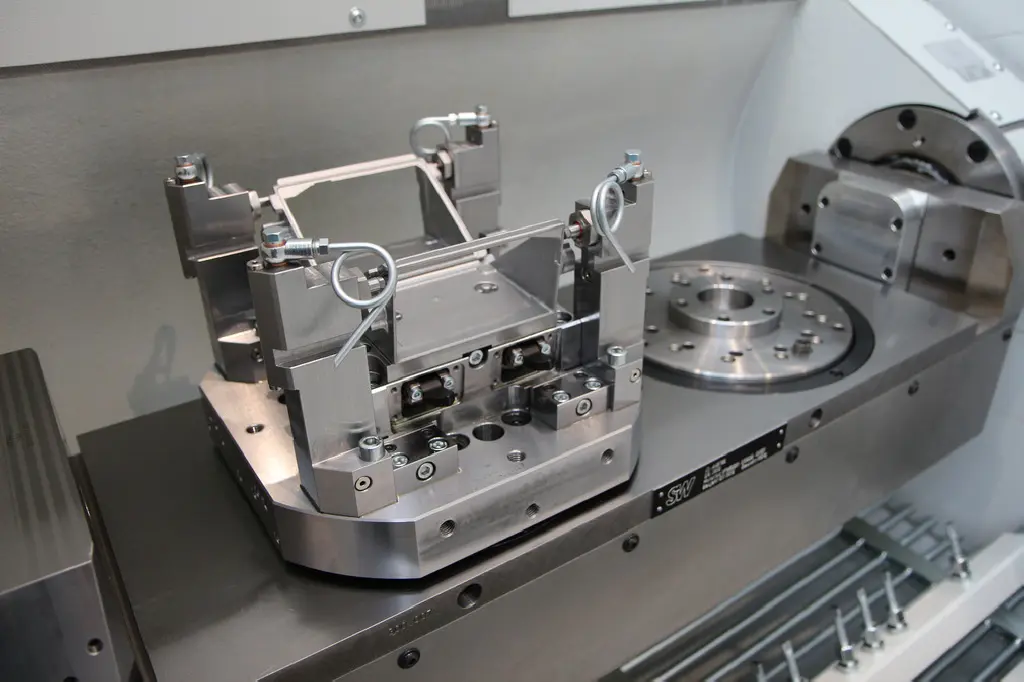
Clamping equipment is a fundamental element of manufacturing technology used to secure workpieces during machining operations. It generates and transmits the necessary clamping force and prevents workpieces from shifting or rotating due to process forces such as cutting forces, feed forces, or vibrations.
In machining—whether milling, turning, drilling, or grinding—clamping equipment forms the basis for dimensionally accurate and reproducible machining results. It is integrated into clamping fixtures and arranged in such a way that the workpiece is precisely positioned and safely held.
Different types of clamping equipment are used depending on the principle of operation and use case. The selection of the appropriate clamping equipment depends on the requirements of the machining process, the workpiece geometry, and the material being machined.
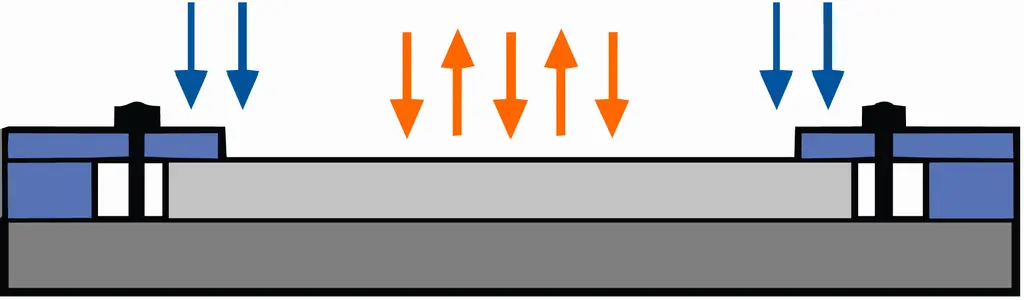
Mechanical clamping equipment transmits clamping forces through direct force application. Typical versions include power clamping blocks, chucks, clamping claws, and hold-down devices.
Vices hold workpieces between a fixed and a movable jaw. They are among the most commonly used types of clamping equipment in metalworking and are available in clamping widths ranging from a few millimeters to over 500 mm. Machine vises for CNC applications enable high repeatability during clamping.
Clamping claws are mounted directly on the machine table and are suitable for workpieces where circumferential clamping is not possible. Hold-down devices secure the workpiece from above against a defined support surface and are used when lateral clamping points would restrict tool access.
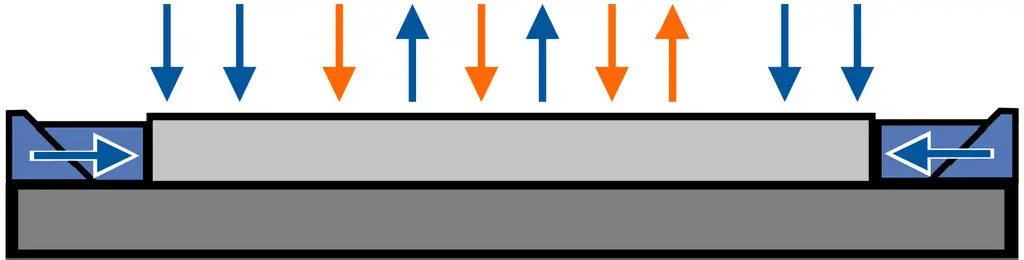
Pneumatic and hydraulic clamping equipment actuates the clamping elements using pressurized media. The advantage over manual operation lies in uniform, reproducible clamping forces and significantly shorter set-up times.
Hydraulic clamping equipment generates high clamping forces—typically up to 50 kN at a system pressure of 400 bar—in a compact shape and is particularly well-suited for heavy-duty machining. Pneumatic clamping equipment is suitable for fast clamping cycles with lower clamping forces, such as those encountered in automated manufacturing processes.

Magnetic clamping plates hold ferromagnetic workpieces in place using magnetic force. Since no lateral clamping elements are required, the entire surface of the workpiece is accessible for machining. Both permanent magnet and electromagnet versions are available.
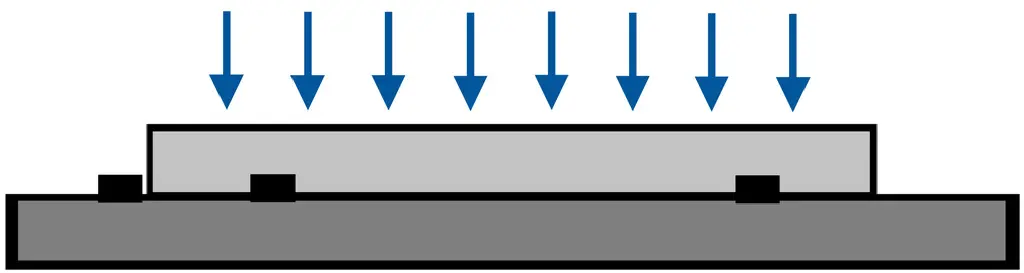
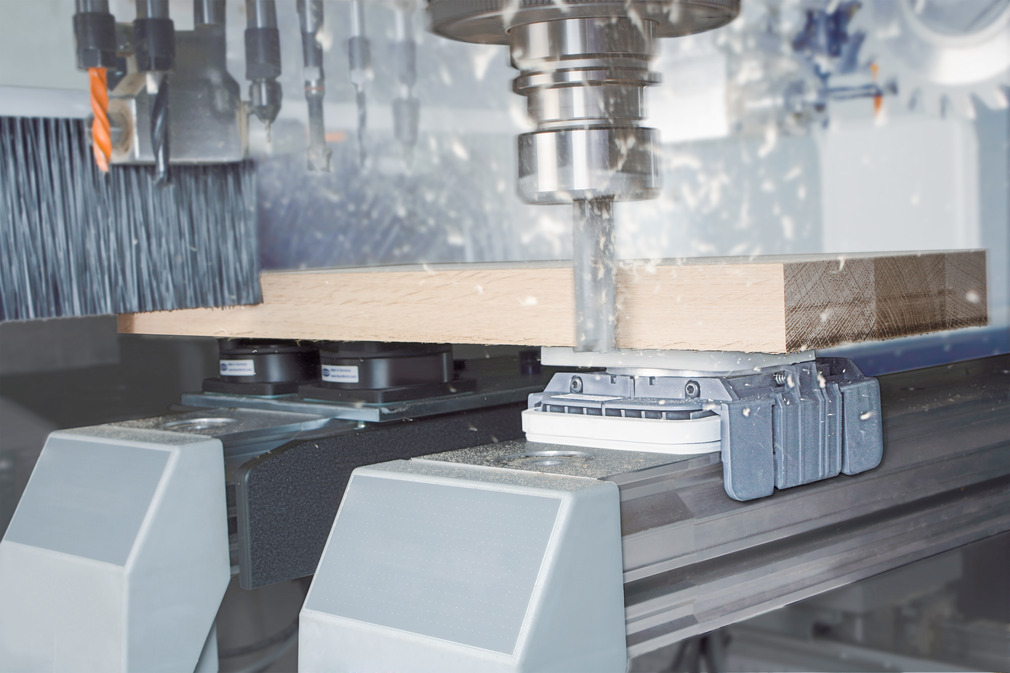
Vacuum-based clamping equipment generates holding force through vacuum. This method allows for the damage-free clamping of workpieces made of wood, glass, plastics, or metal without the need for mechanical clamping points. It is particularly well-suited for large-surface, thin-walled, or delicate workpieces where mechanical clamping equipment would cause warping or surface damage.
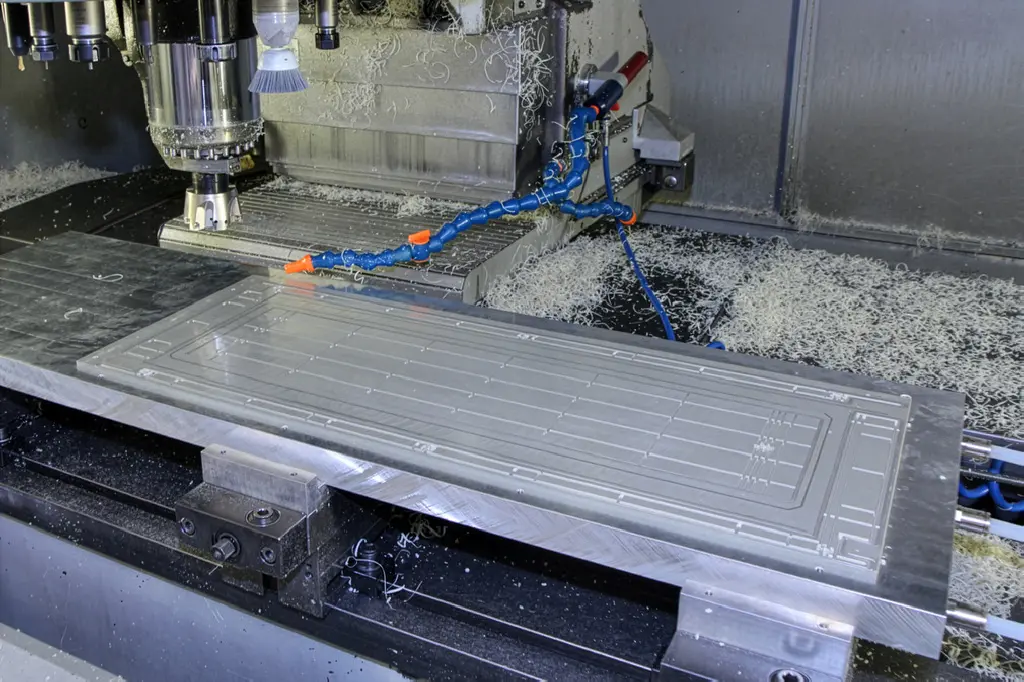
Clamping equipment must safely absorb the forces generated during the machining process and hold the workpiece in its defined position.